
Could Superheroes Bring Reggae Back?
 If you ask a random stranger on the street about what the saddest song they’ve ever heard is… Well, they’re probably going to answer with something by Nickelback, Coldplay or Fallout Boy. But if you ask a random stranger on the street who is not an angsty teenager with horrible taste in music, chances are they’re going to respond with Johnny Cash’s Hurt. “Hurt”, a cover of an equally depressing Nine Inch Nails song, was the last thing Cash ever recorded, and is basically an ode to the life he has led and a lamentation that it will be ending soon (he passed away seven months after the music video was shot). His somber voice that sounds so at peace with the thought of death while also singing lyrics that attack it for taking everyone from his life away is enough to bring most people to tears… And yet despite being one of the most famous “depressing” songs out there, despite the fact that it has appeared in numerous movies and TV shows such as “Smallville”, “Criminal Minds” and “Person of Interest”, “Hurt” hasn’t quite reached that classic song status that other hits from the past have in our popular culture. You don’t hear it on the radio. You don’t really hear people reference it in conversations unless they’re specifically talking about songs that made them cry. It’s not going to appear in your suggested videos on YouTube, or as a Pandora recommendation.
Naturally, that all changed when the first trailer for “Logan” – a movie about a much older Wolverine that has to deal with an ailing body and the fact that he has outlasted all of the people in his life – made excellent use of “Hurt”, with many calling it one of the best trailer song choices of all time. The song was so effective in its context that people are already calling “Logan” the best superhero movie of 2017, despite the fact that the two previous movies starring Wolverine were pretty terrible. But it actually goes both ways – the trailer actually gave the song a massive boost, to the point where while just two months ago its music video on YouTube had 23 million views, while now it had over 29 million – and that’s without counting all of the individual uploads of the song, which have also received a massive boost. But that’s arbitrary data, really. Let’s look at something a little bit more concrete… Oh, I know! Remember back in 2014, when Blue Swede’s “Hooked on a Feeling” was used in the trailer for “Guardians of the Galaxy” and arguably started this whole trend of using popular songs in trailers? Well, it actually gave “Hooked on a Feeling” its best week in sales ever, which is definitely saying something considering how popular the song was even without the boost that “Guardians” gave it. Other songs have experienced this too – “Bohemian Rhapsody”, one of the most popular songs of all time, was exposed to an entirely new generation thanks to its appearance in the “Suicide Squad” trailer. But it doesn’t just apply to trailers, oh, no. The most memorable sequence in this year’s “X-Men: Apocalypse” involved Quicksilver running at super-speed saving people to the tune of Eurythmics’ “Sweet Dreams” – a song that literally nobody had paid any mind to since the 80s.
Superhero movies obviously have a huge sway over the young generation. They’re popular, and as such get to decide what else is popular. So I was thinking… What if a superhero movie used a reggae song in its trailer or soundtrack? Would that cause it to rise in the charts and perhaps result in a bit of a resurgence for the genre, especially among a younger audience? Obviously, not even I would want to hear reggae in Ben Affleck’s new “Batman” movie, but considering just how experimental these movies have been getting lately, I genuinely don’t see why reggae wouldn’t be the right soundtrack for one. We’ve reached a point in our culture where old musical styles which used to be really popular, but have lost relevance, can be brought back into the spotlight through media (like how “Hotline Miami” brought back 80s electronica), so when is reggae’s turn going to come?
November 2, 2016 Jamaican music Read more >
 Blackjack is a special game because in order to win, you need a blend between luck, skills and strategy. I was never too fond of slots, for example, simply because I feel like I have no control whatsoever over the outcome. It doesn’t matter how hard you press the spin button or whether or not you manually stop the reels or simply let them spin. The outcome is decided by the
  Bob Marley is definitely one of my all-time favourite music artists and it wasn’t an easy task narrowing down all the songs of his that I love to only five. Well, I somehow managed to do it and trust me, it wasn’t an easy task. So here it is, a list of the five Bob Marley songs that I love the most:
 To the whole world Bob Marley is a musical genius, a symbol of the Rastafari movement and philosophy and the face of reggae. While there are a handful of singers that have achieved this type of legendary status, only a small part of the general public knows about his really humble beginnings and his life before forming the Wailers. So this is exactly what we’ll talk about in this article.
 Usually, I am not the type to walk around with the phone everywhere and that’s why I don’t have a lot of apps on it, either. But recently I came across this app and it kind of intrigued me, so I wanted to share my impressions with you. If you are on the lookout for a Jamaican themed slot game to play on the move, then the Rasta Slots app is right up your alley. I came across it when I was about to take a long trip to the countryside to help my grandmother out with some work, so I figured I better stack up on games, as I just got my new iPhone and I have very few apps on it so far. So, even though I had promised myself not to go back to my old habits – gambling, obviously, I figured it will be a long ride, so I decided to at least try some play-money slot apps. And this is how I found the Rasta slots app and the thing that I liked best about it is that it couldn’t cost me any money. Hmm, or can it? What I quickly noticed about the app was that, while you can
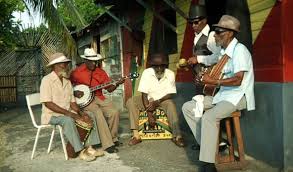 Reggae’s origins are actually shrouded in quite a lot of mystery. We don’t know exactly how it originated, or even why it was named like that. We know that the name Reggae means “ragged”, so we can probably assume that the very first anonymous pioneers of the genre came from lower class households. Early reggae was a combination of Jamaican folk styles such as the traditional
 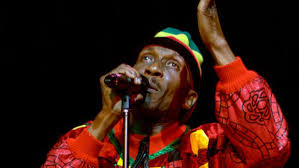 Throughout the 60s, reggae began slowly spreading throughout Jamaica, eventually leaving it and spreading to the UK and US, especially after Jamaica’s independence in 1962. In 1967, Prince Buster’s song
 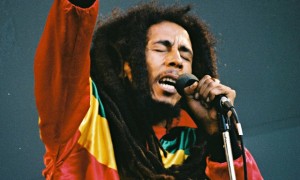 We can’t talk about reggae without mentioning
 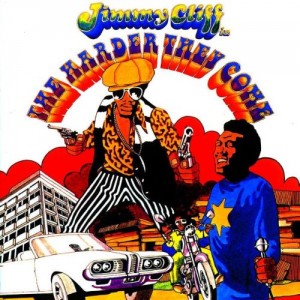 Remember back at the history page where I spoke about a Jamaican movie called “The Harder They Come”? You know, the one whose soundtrack was all reggae and helped jump-start the genre’s popularity in the West almost single-handedly? Well… This album is its soundtrack. And it is MAGNIFICENT! “The Harder They Come” is one of those very rare albums that solidify a genre, giving listeners a taste of just what exactly that kind of music is capable of. While it’s true that Jimmy Cliff has only contributed a couple of tracks to the album that bears his name, almost every single song here is pure gold. I don’t even know what else to say about it – this album made thousands of people fall in love with reggae, and it just might make you fall in love as well!
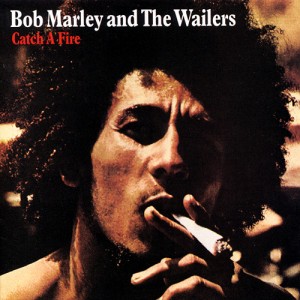 Bob Marley was not a perfect man, not by a long shot. He held some very questionable beliefs (which, indirectly, ended up costing him his life) and engaged in a lot of activities, like a number of affairs (some of which resulted in children) that would have been seriously looked down upon in modern society. Bob Marley was not the highest selling, most prolific or even the most famous reggae artist of his time. And yet, somehow, to this very day he has remained the face of the entire genre, with his likeness adorning numerous products and his music being fondly remembered even by people who don’t know anything about reggae. He has truly turned into a larger-than-life legend, and his albums can truly show us why. Out of all of them, I chose “Catch A Fire” to represent him, as I believe it represents its style flawlessly. It’s also the one with “Stir It Up”, so, y’know. If you haven’t listened to “Stir It Up”, just do yourself a favour and YouTube it right away, alright?
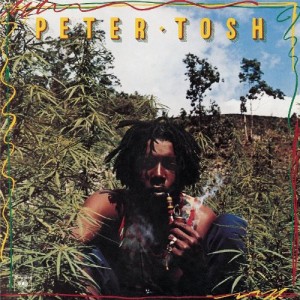 Well, it’s fun to see that weed lovers have been desperately trying to get their favourite recreational drug legalized for at least 40 years now. Peter Tosh, a founding member of The Wailers (Bob Marley’s band) who left the group in ’73 in order to pursue a solo career apparently wanted it legalized so badly that he named a single and his début album after the cause. Despite their controversial themes, the tracks on the album are still very, very solid, and a must-listen for every reggae fan out there. Too bad Peter Tosh seemed to forget that marijuana was not, in fact, legalized yet when he smoked a joint on stage in 1978, which resulted in his arrest and led to a downward spiral which ended his career. Regardless, “Legalize It” represents one of the pioneers of the reggae genre at arguably his finest, which definitely makes it worth a listen.
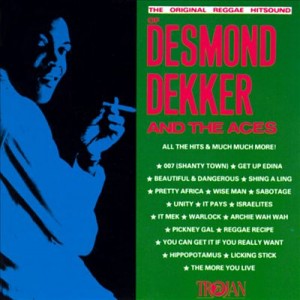 Boy, that’s a mouthful, isn’t it? Bob Marley is widely (and fondly) remembered as THE reggae artist, the man who popularized and perfected the genre, and for most people who just know about reggae from popular culture, he’s the face of the entire genre. However, for people who love reggae and have listened to quite a lot of albums, another name often pops in mind as the person who solidified and perfected it. That name, obviously, is Desmond Dekker. While Dekker didn’t have nearly as many albums as Marley did, he had just as many – if not more – absolutely amazing singles, a good chunk of which are collected in the Hitsound album, which is definitely worth a listen. The coolest thing about it is that it’s not only a fantastic collection for reggae fans, but also a great introduction to beginners, so either way there’s no excuse not to listen to “The Original Reggae Hitsound of Desmond Dekker And The Aces”!
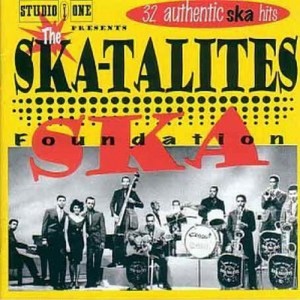 Don’t let the date deceive you – despite being released in 1996, all of the tracks on this album originated in 1963 and 1964. “Skatalites” are just one of numerous bands reggae band that popped up in the early 60s following the genre’s rise to popularity in Jamaica. They only existed for about 14 months, quickly being drowned in the sea of other successful reggae artists without even releasing a single album. They made quite a lot of singles, but they were never collected officially… Until 1996. You see, unlike most reggae bands of the time, which were mostly forgotten, for some reason “Skatalites” endured. Something about the band’s music remained – most likely a little something called “ska”, which is the sound that would remain an integral part of reggae throughout its history. Despite their initial dissolution in 1965, the band found new success and fame after being rediscovered over 20 years later, and they’ve been around ever since. Let’s just say, there’s a perfectly good reason for that.
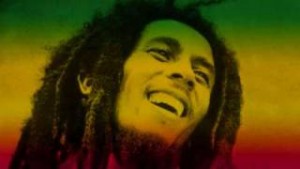 Reggae is a musical style and genre that, as a lot of people know, began in Jamaica in the 1960s, but quickly spread to the United States where it found immense popularity thanks to artists such as Bob Marley, Jimmy Cliff and Peter Tosh. It was created through a fusion between traditional